Let me be straight with you: most small business owners wait way too long to hire a bookkeeper. They do their own books until they're drowning in receipts, missing deductions, or worse — getting a surprise bill from the IRS that they never saw coming. I've been bookkeeping for over 30 years, and the businesses I see struggle the most are almost always the ones who waited.
So how do you know when it's time? Here are 6 honest signs that you need a bookkeeper — and why ignoring them costs you more than the bookkeeper ever would.
1. You Have No Idea What Your Numbers Mean
If someone asked you right now, 'What was your net profit last month?' — could you answer without digging through spreadsheets for 20 minutes? If not, that's a problem. Your financial reports should be something you can glance at and understand. If they're a mystery, your books probably aren't set up in a way that serves you.
2. You're Mixing Personal and Business Money
This one sends a shiver down my spine every time I see it. Using your personal checking account for business expenses — or worse, paying personal bills from your business account — is one of the fastest ways to turn a simple audit into a nightmare. A bookkeeper sets up clean systems from the start so this never becomes your problem.
3. Tax Season Feels Like a Crisis Every Year
If you spend February through April in a total panic, hunting down receipts and trying to remember what that $847 charge from March was for... you needed a bookkeeper 11 months ago. Tax season should be a non-event when your books are clean and current all year long.
4. You're Behind on Your Books (Even by Just a Month)
One missed month turns into two, then suddenly it's July and you have no idea where the first half of your year went financially. Behind books mean you can't make smart decisions about hiring, buying equipment, or taking on new clients — because you genuinely don't know what you can afford.
5. You've Missed Payments, Invoices, or Deadlines
Late vendor payments, forgotten invoices to clients, missed payroll tax deadlines — these things don't just cost you money in penalties. They cost you relationships and credibility. A bookkeeper tracks all of it so nothing slips through the cracks.
6. Your Business Is Growing
More revenue is wonderful. But more revenue also means more transactions, more complexity, more employees, more tax obligations. Growth is exactly when you need a professional set of eyes on your finances — because the stakes just got bigger.
The Real Talk
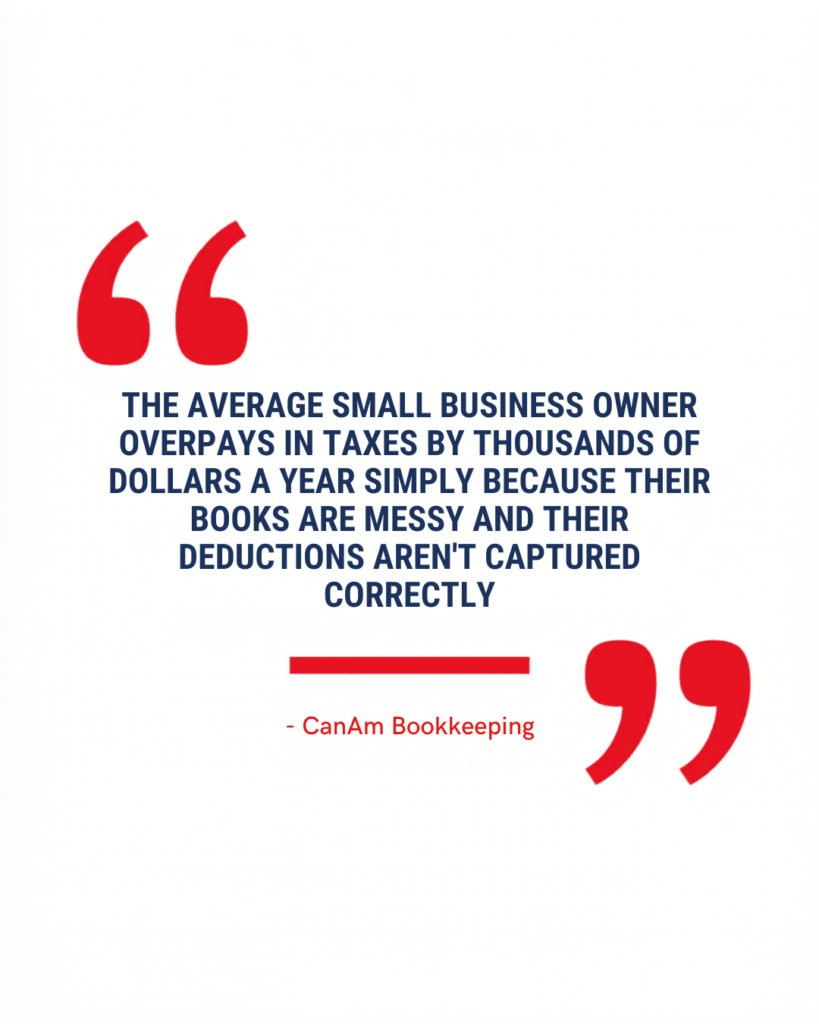
Here's what I tell every business owner who says 'I can't afford a bookkeeper': you can't afford not to have one. The average small business owner overpays in taxes by thousands of dollars a year simply because their books are messy and their deductions aren't captured correctly. A good bookkeeper pays for herself.
What to Do Next
- Schedule a financial checkup — even just 30 minutes reviewing your last 3 months of bank statements
- Ask yourself honestly: do I know my revenue, expenses, and net profit for this month?
- If the answer is no, it's time to reach out to a professional
You built your business because you're good at what you do. Bookkeeping is what we're good at. Let's each do our jobs.
Want More of This? Join the CanAm Connection Newsletter.
Every month I send out one newsletter packed with real financial tips, seasonal reminders, and the kind of plain-English advice your accountant probably never gives you. No jargon. No fluff. Just the stuff that actually helps you run a smarter business.
Sign up at CanAm Bookkeeping — it's free, and you can unsubscribe any time.