
Amending Tax Returns: When and How to File Form 1040-X
Amending Tax Returns: When and How to File Corrections
You filed your tax return on time, breathed a sigh of relief, and moved on with your life. Then you discovered a mistake. Maybe you forgot to include a 1099, or you claimed the wrong filing status, or you realized you missed a significant deduction. Now what?
The thought of dealing with the IRS again might make you want to hide under your desk, but here's the truth: amending a tax return is a normal part of the tax process, and when done correctly, it's actually straightforward. I've walked dozens of small business owners and bookkeepers through this process, and I want you to feel confident about when and how to file corrections.
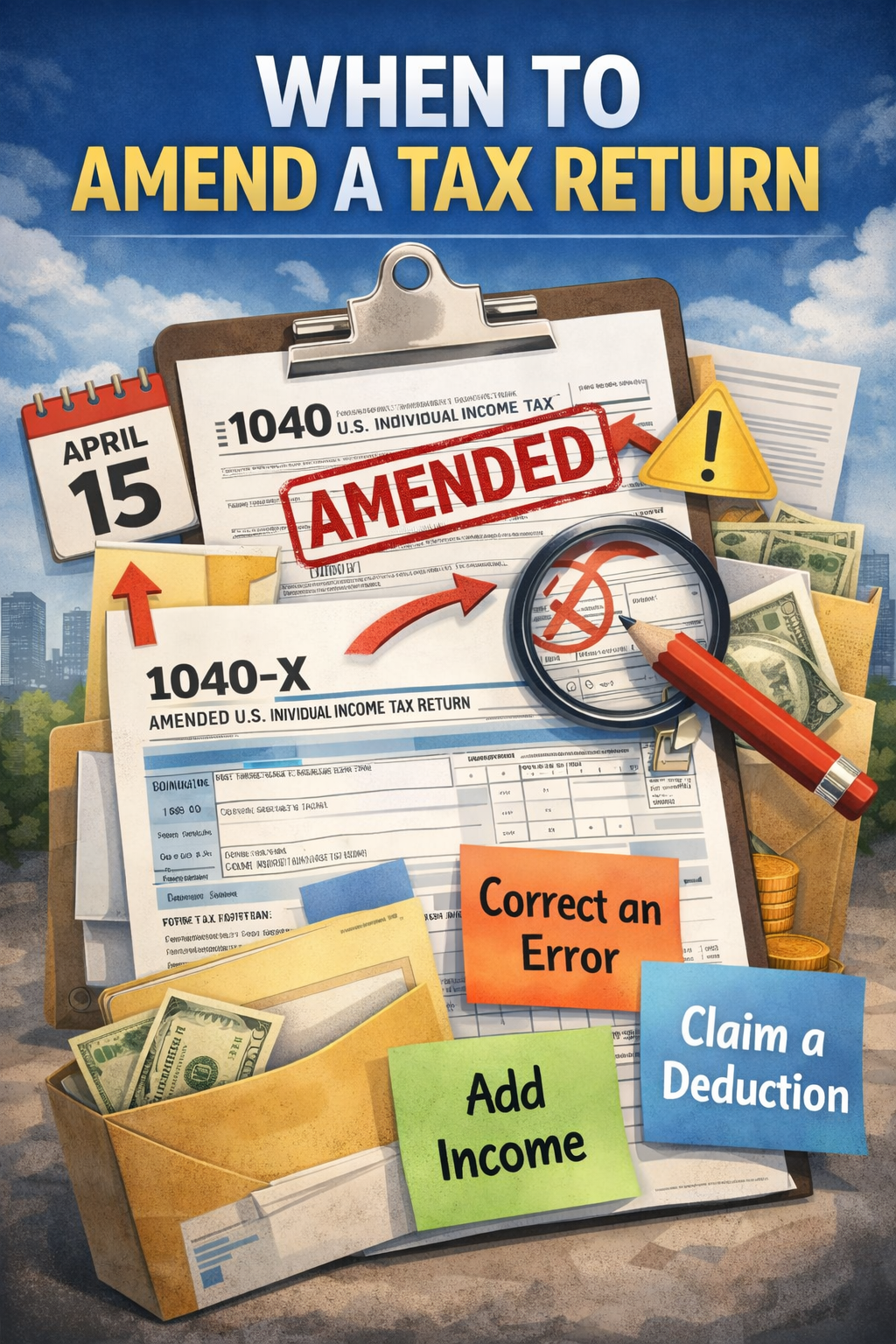
When you actually need to amend
Not every mistake requires an amendment, and this is where a lot of people waste time and energy. Let me break down when you do and don't need to file Form 1040-X.
You need to amend when you discover errors that affect your tax liability. This includes forgetting to report income from a W-2 or 1099, claiming the wrong filing status, missing significant deductions or credits, or incorrectly reporting business expenses. These are material changes that impact how much tax you owe or your refund amount.
You also need to amend if you realize you should have taken a different approach to something major, like choosing to itemize instead of taking the standard deduction, or vice versa. Business owners sometimes discover they qualified for credits they didn't claim, like the home office deduction or certain business credits.
Here's what you don't need to amend for: math errors. The IRS automatically corrects these and sends you a notice. You also don't need to amend if you're just attaching missing forms that don't change your numbers, like a forgotten Form W-2 that you already reported correctly. The IRS will match those up on their end.
"Most people are surprised to learn that the IRS actually wants you to fix mistakes rather than let them compound over time."
How to file Form 1040-X correctly
Once you've determined you need to amend, the process is methodical and manageable when you take it step by step.
Start by gathering your original tax return and all the documentation that shows what needs to be corrected. You'll need the numbers from your original return to fill out Form 1040-X properly. This form has three columns: Column A shows what you originally reported, Column B shows the changes you're making, and Column C shows the corrected amounts.
The most important part of Form 1040-X is the explanation section on page 2. This is where you tell the IRS exactly what you're changing and why. Be clear and specific. Instead of writing "forgot income," write "Failed to include 1099-MISC income of $5,000 from ABC Company." The more specific you are, the faster your amendment gets processed.
You'll need to attach any new or corrected forms and schedules that support your changes. If you're adding a Schedule C you forgot, attach it. If you're correcting your Schedule A itemized deductions, include the corrected version. Make sure everything is clearly labeled.
Pro Tip: Always file a separate Form 1040-X for each tax year you're amending. Never try to amend multiple years on one form. I learned this the hard way when I first started coaching, watching a client's amendment get rejected because they tried to fix two years at once. Each year is its own return, so each year needs its own amendment.
Here's something critical about timing: you generally have three years from the date you filed your original return, or two years from the date you paid the tax, whichever is later, to file an amendment that could get you a refund. If you're amending to pay more tax, you should file as soon as you discover the error to minimize penalties and interest.
What to expect after you file
Once you mail your Form 1040-X (most amendments still can't be filed electronically, though this is changing for some situations), processing takes about 16 weeks on average. Sometimes longer during busy periods. You can track your amendment status on the IRS website using their "Where's My Amended Return?" tool, but you'll need to wait about three weeks after mailing before it shows up in the system.
If your amendment results in additional tax owed, include payment with your Form 1040-X to stop interest from accruing. If you're expecting a refund, be patient. Amended returns take longer to process than original returns because they require human review.
The IRS will send you a letter when they finish processing your amendment. This might be a simple acknowledgment that they've made the changes, or it might be a request for additional information. Respond to any requests promptly and keep copies of everything.
Real-world example
I coached a small business owner named Marcus who came to me three months after filing his taxes. He'd been going through old bank statements and realized he had completely forgotten to report a side consulting gig that brought in $12,000. He had the 1099-NEC sitting in a pile of mail he hadn't opened on time.
Marcus was terrified. He thought he'd be audited, penalized, and maybe even face criminal charges. I walked him through the reality: this was a straightforward mistake that happens all the time, and filing an amended return would fix it.
We prepared Form 1040-X together. In Column A, we entered his original income. In Column B, we added the $12,000. Column C showed his corrected total income. We attached the 1099-NEC and wrote a clear explanation: "Failed to include 1099-NEC income from XYZ Consulting in the amount of $12,000. Form was received after original return was filed."
Marcus owed about $3,800 in additional tax. We included a check for the full amount plus estimated interest. Sixteen weeks later, he received a letter from the IRS accepting his amendment and adjusting his interest to the actual amount (which was $87 less than we estimated, so they sent him a small refund).
That's it. No audit, no major penalties, just a corrected return and a lesson learned about opening mail promptly.
Action steps to take this week
If you've discovered an error on a previously filed return, don't wait. Here's what to do right now:
Pull your original tax return and identify exactly what needs to be changed. Write down the original amounts and the corrected amounts before you start filling out any forms.
Download Form 1040-X from the IRS website and read the instructions completely before you start filling it out. The instructions include examples that are actually helpful.
Gather all supporting documentation for your changes. Make copies of everything before you mail your amendment, and keep those copies with your tax records.
If you're amending to pay additional tax, calculate the amount you owe and include payment with your amendment to minimize interest charges.
For my fellow bookkeepers, create a checklist for reviewing client returns before filing to catch common mistakes: missing 1099s, incorrect filing status, overlooked deductions, and math errors. Prevention is always easier than amendment.
You've got this
Filing an amended return isn't a sign of failure or incompetence. It's a normal part of managing your tax obligations responsibly. The IRS actually has processes in place specifically because they know mistakes happen, and they expect people to correct them.
The key is acting as soon as you discover an error rather than hoping it goes away. It won't. But taking action to fix it demonstrates good faith and usually results in minimal consequences beyond paying what you actually owe.
Take time this week to review your most recent tax return with fresh eyes. You might not find anything wrong, but if you do, you now know exactly how to fix it.
Have you ever had to amend a tax return? What was the hardest part of the process?
***This blog is for information only and is not meant as tax advice. ALWAYS consult a tax professional regarding your personal situation***
