Balance Sheet Basics for Small Business Owners
Small Business Finance, Balance Sheet Basics
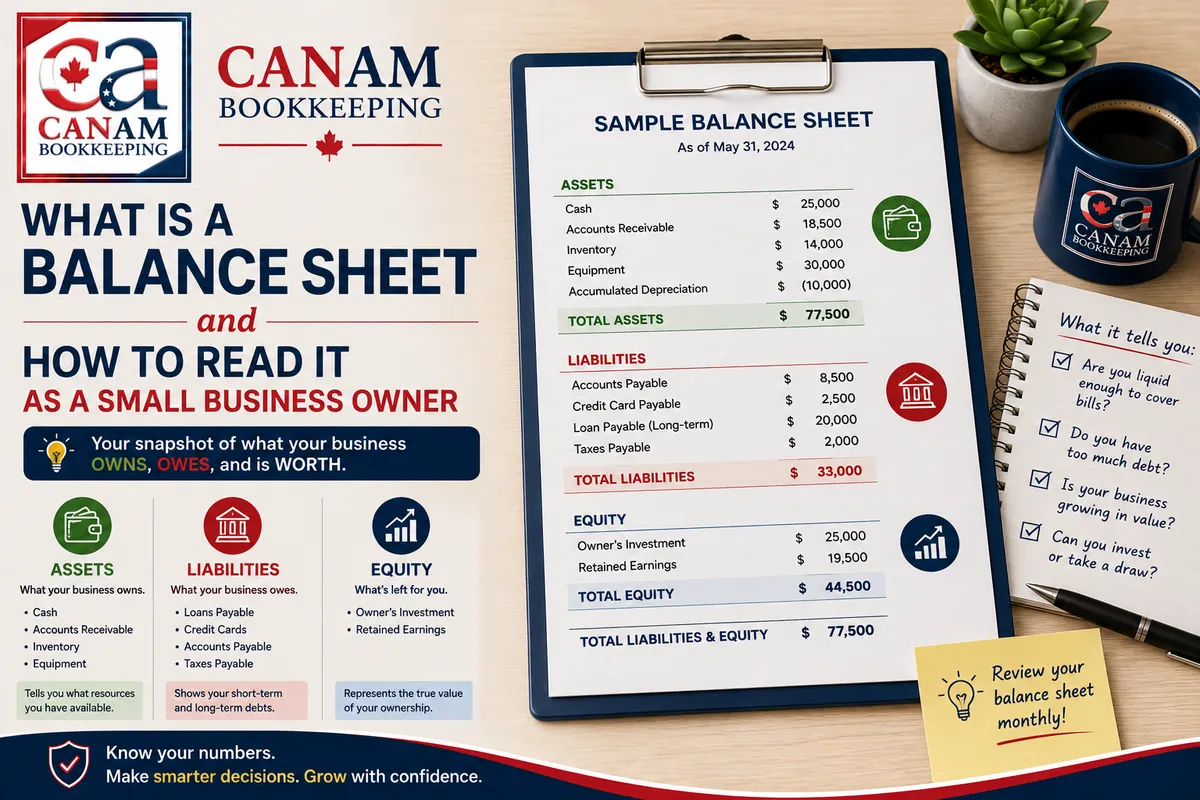
What Is a Balance Sheet and How to Read It as a Small Business Owner
Understanding your balance sheet is one of the most powerful ways to see the true financial health of your business. This guide breaks it down in clear, practical language so you can read it with confidence and use it to make better decisions.
What Is a Balance Sheet?
A balance sheet is a financial statement that shows what your business owns, what it owes, and the remaining value that belongs to you or your investors at a specific point in time. Think of it as a snapshot of your company’s financial position on a particular day, such as the end of the month, quarter, or year.
Every balance sheet is built around a simple but powerful equation:
Assets = Liabilities + Equity
Assets are resources your business owns and uses to generate revenue — such as cash, inventory, equipment, and accounts receivable (unpaid customer invoices).
Liabilities are what your business owes to others — like credit card balances, vendor bills, payroll taxes, and loans.
Equity (sometimes called owner’s equity or shareholders’ equity) is the portion of the business that belongs to you after all liabilities are paid. It includes your initial investment, additional contributions, and retained earnings.
When your books are accurate, the total value of your assets will always equal the combined total of your liabilities and equity. This balance is why it’s called a balance sheet and why it is such a reliable tool for assessing financial health.
📌 Key Takeaway: A balance sheet is not about profit; it’s about position. It shows where your business stands financially at a specific moment in time.
How to Read a Balance Sheet Step by Step
1. Start with the Assets Section
Most small business balance sheets list current assets first, followed by non-current (long-term) assets.
Current assets are expected to be used or converted to cash within 12 months. Common examples include cash, checking and savings accounts, accounts receivable, and inventory.
Non-current assets are long-term resources such as equipment, vehicles, furniture, and sometimes intangible assets like patents or software.
As you review this section, ask yourself: Do I have enough liquid assets (especially cash) to comfortably cover upcoming bills and expenses? A balance sheet with strong cash and manageable receivables usually points to healthier day-to-day operations.
Reviewing assets, liabilities, and equity regularly helps prevent cash flow surprises.
2. Review Liabilities: What Your Business Owes
Next, look at liabilities, usually split into current and long-term obligations.
Current liabilities are due within a year, such as accounts payable, credit card balances, sales tax payable, and short-term loans or lines of credit.
Long-term liabilities include loans and obligations that extend beyond 12 months, such as equipment loans or SBA loans.
Compare your total current liabilities to your total current assets. This helps you quickly gauge whether your business can meet its short-term commitments without strain.
💡 Pro Tip: If current liabilities are consistently higher than current assets, it may be time to revisit pricing, collections, or financing strategies with a professional bookkeeper.
3. Understand Equity: What’s Left for the Owner
The equity section shows the net value of your business after debts are subtracted from assets. For many small businesses, this includes:
Owner’s capital or member equity (your contributions into the business)
Retained earnings (profits left in the business instead of being distributed)
Positive and growing equity over time is a strong sign of a healthy business. If equity is negative, it may indicate that liabilities are too high, assets are too low, or losses have accumulated — all signals that you should take a closer look and possibly seek guidance.
4. Look Beyond the Numbers: Trends and Ratios
Reading a balance sheet is not just about one report. It’s about comparing this period to prior periods to see trends:
Is cash increasing or decreasing over the last few months?
Are receivables growing faster than sales, suggesting slow collections?
Is debt being paid down, or are liabilities building up?
Simple ratios, such as comparing current assets to current liabilities, can also help you quickly understand your short-term financial strength. A professional bookkeeper can help calculate and interpret these numbers so they’re meaningful for your specific business model and goals.
Turn Your Balance Sheet into a Decision-Making Tool
When it’s accurate and up to date, your balance sheet becomes more than an accounting requirement — it becomes a practical tool for deciding when to hire, whether to invest in new equipment, how to manage debt, and how much cash to keep on hand for peace of mind.
At CanAm Bookkeeping, LLC, we specialize in helping small businesses across the United States maintain clear, reliable balance sheets and financial reports. Our virtual bookkeeping services are designed to bring you clarity, reduce stress, and give you the confidence to move your business forward with solid data behind every decision.
Ready for clarity? Schedule a free consultation with CanAm Bookkeeping, LLC to get your books in order and turn your balance sheet into a powerful tool for helping your business thrive.
