Avoid Common Bookkeeping Mistakes in Small Business
Bookkeeping, Small Business Finance
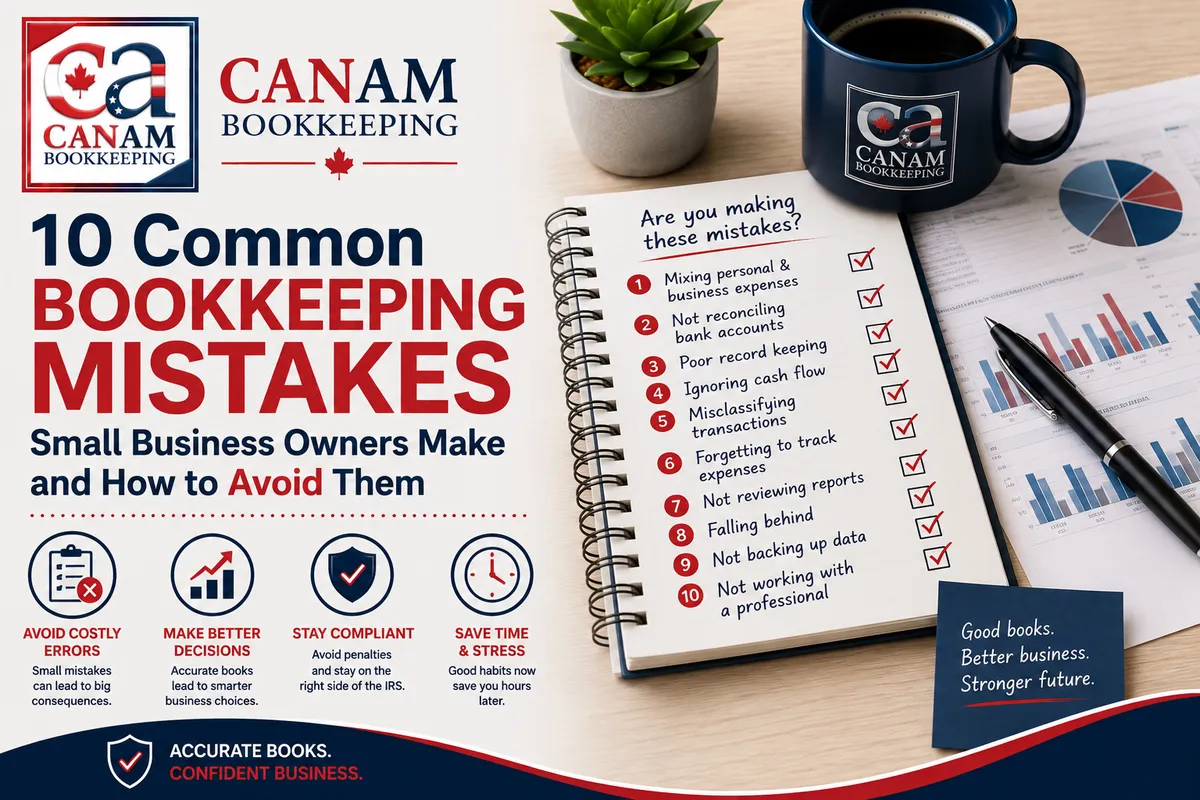
10 Common Bookkeeping Mistakes Small Business Owners Make (And How to Avoid Them)
Clean, accurate books are the foundation of a healthy business. Yet many small business owners unintentionally make bookkeeping mistakes that lead to stress, surprise tax bills, and poor financial decisions. At CanAm Bookkeeping, LLC, we see the same avoidable errors again and again—especially in growing businesses that are trying to do everything themselves.
1. Mixing Personal and Business Finances
One of the most common—and costly—mistakes is using the same bank account or credit card for both personal and business expenses. This blurs the line between you and your business, makes tax time a nightmare, and can even create legal issues for certain business structures. Open dedicated business accounts and use them consistently so every transaction is clearly tied to your company.
2. Ignoring Regular Bank and Credit Card Reconciliations
If your bookkeeping software and bank statements don’t match, your reports can’t be trusted. Skipping monthly reconciliations leads to missing transactions, duplicate entries, and inaccurate cash balances. Reconciliations catch errors early, help detect fraud, and give you confidence that your numbers reflect reality—not wishful thinking.
3. Misclassifying Income and Expenses
When transactions are coded to the wrong accounts, your profit and loss statement becomes misleading. Common issues include recording owner draws as expenses, treating loan proceeds as income, or lumping all expenses into “Miscellaneous.” Proper categorization ensures you’re seeing true profitability, taking the right deductions, and presenting clean records to lenders, investors, and the IRS.
4. Falling Behind on Data Entry and Recordkeeping
Waiting until tax season—or until your accountant is asking for numbers—is a recipe for stress and mistakes. Trying to recreate a year’s worth of transactions from memory often leads to missing receipts, forgotten expenses, and rushed decisions. Bookkeeping should be a weekly habit, not a once-a-year scramble. Consistency turns your books into a real-time decision-making tool, not just a compliance chore.

A simple monthly checklist can keep your books accurate and tax-ready all year.
5. Poor Receipt and Documentation Management
Tossing receipts into a drawer—or worse, the trash—can cost you real money. Without proper documentation, you may lose legitimate deductions in the event of an audit. Use digital tools to snap photos of receipts, attach them to transactions, and store supporting documents securely. Clear documentation protects you and shows that your numbers are backed by evidence, not guesses.
6. Misunderstanding Sales Tax and Payroll Tax Obligations
Sales tax and payroll tax rules vary by state and can be complex. Common errors include not charging sales tax when required, remitting the wrong amount, or mishandling payroll tax withholdings and filings. These mistakes often result in penalties, interest, and stressful letters from tax agencies. Working with professionals who understand multi-state requirements helps keep you compliant and prepared as your business grows.
7. Treating Owner Pay Incorrectly
Many owners simply transfer money from the business account to their personal account and call it “salary,” even when it should be recorded as an owner draw or distribution. For corporations, owners sometimes pay themselves without proper payroll, skipping required withholdings. The right method depends on your entity type and tax strategy. Recording owner compensation correctly keeps your books clean and your tax filings accurate.
8. Not Tracking Accounts Receivable and Payable Properly
Sending invoices is only half the job—you also need to track who has paid, who is late, and what you owe to vendors. Many businesses lose cash flow simply because they don’t follow up on overdue invoices or overlook bills until they are past due. Accurate accounts receivable and payable reports help you manage cash, maintain strong vendor relationships, and avoid uncomfortable conversations with customers.
9. Relying Only on the Bank Balance to Make Decisions
A healthy bank balance can be misleading. You may have upcoming payroll, tax payments, loan obligations, or large vendor bills that haven’t cleared yet. Making decisions based solely on what’s in the bank today can lead to overspending and cash crunches. Instead, use up-to-date financial reports and cash flow forecasts to understand your true financial position before committing to new expenses or investments.
10. Waiting Too Long to Get Professional Help
Many owners wait until their books feel “too messy” or the IRS sends a notice before calling in a professional. By that point, cleanup can be time-consuming and more expensive. Partnering with an experienced virtual bookkeeping firm early means you get reliable numbers, timely reports, and guidance tailored to your business. It also frees you to focus on growth, not spreadsheets and reconciliations.
📌 Key Takeaway: Bookkeeping isn’t just about staying out of trouble—it’s about giving yourself clear, confident insight into how your business is really performing so you can make smarter decisions every day.
Build Stronger Books and a Stronger Business
Avoiding these 10 common bookkeeping mistakes can transform your financial picture—from confusing and reactive to clear and proactive. Whether your business brings in $20,000 or $300 million in annual revenue, accurate books are essential to managing cash flow, planning for growth, and sleeping better at night. You don’t have to tackle it alone. CanAm Bookkeeping, LLC provides expert virtual bookkeeping and payroll services designed specifically for small businesses across the United States, bringing big-business financial expertise to your everyday operations.
If you recognize any of these mistakes in your own books, now is the perfect time to get support. Our team will help you clean up past records, put reliable systems in place, and create financial reports you can actually use. Schedule a free consultation to get your books in order and help your business thrive.
